Sorry, you need to enable JavaScript to visit this website.

CampCountyNow.com

GUY STUFF
GUY STUFF

GUY STUFF

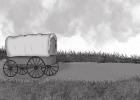
The word “pioneer” conjures up so many images. You instantly think of things like those who made their way west back in the early days of our country. You can see the visions of covered wagons, trail drives and vast fields of buffalo roaming the prairie. You might also think of the early days of our space program, when brave souls crammed themselves into a rocket and first blasted off into space. You might even think of recent events, where new modes of space travel will soon make it possible for the everyday joe to take a ride up into the heavens. To me, the word pioneer is a word full of hope. Pioneers are people who have stretched the limits and boundaries of normal life and braved new worlds. Those who rode those long, dusty paths on horseback and covered wagon were those who were brave enough to meet the challenges of life in a land that was new to them, and hence pave the way for all of those who came after. I mean, literally pave the way by making roads where there were none, blazing a trail across a country that didn’t even exist then.


Meatless Meat

Meatless Meat

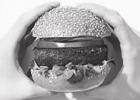
In 2012, a company based in California offered their first lab-based meat: chicken nuggets. They began expanding to “meatless” beef in 2014. Beyond Meat isolated the basic building blocks of meat: proteins, fats, minerals, carbohydrates, and water. They developed a system to reproduce meat in a laboratory by isolating these building blocks in plants, and then processing them using heating, cooling, and pressure in order to produce a meatless “meat” burger. The plants that provide the five building blocks are as follows:

A Passel of Information

A Passel of Information

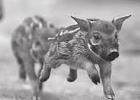
Wild hogs are a scourge in the United States where they cause a tremendous amount of destruction every year to crops, livestock, forests, native wildlife, and the environment. Conservative estimates place the amount of damage at $1.5 billion annually while $400 million is billed to Texas alone. Opportunistic omnivores, these feral hogs consume a diet of roughly 90 percent plant matter: mast (hardwood nuts), roots, and agricultural crops while the other 10 percent is meat such as reptiles, amphibians, rabbits, and even fawns.

Pages